BugBunny.ai • March 2026 • 6 min read
Precision Over Volume: Why BugBunny's Signal Stands Out
Security research is easy to market as noise. It is much harder to build a public record that stays concise, lands cleanly with maintainers, and repeatedly turns into real fixes, real CVEs, and high-confidence outcomes. That is the standard BugBunny is optimizing for.
110+
Public CVEs discovered
7.00
HackerOne signal
251
Public reputation shown on the snapshot
No. 1
HackerOne Business ranking as of May 2026
A public record shaped by signal
BugBunny's external record is not built on flooding programs with marginal reports. It is built on finding issues that are immediately relevant, technically grounded, and concise enough for engineering teams to validate and ship. The result is a portfolio of public disclosures that is large enough to be meaningful, but disciplined enough to stay credible.
That discipline matters because mature security teams do not buy volume. They buy clarity. They want findings that survive triage, reduce time-to-fix, and map cleanly to business risk. The strongest signal BugBunny sends is not the headline number of CVEs. It is the consistency of the hit rate behind them.
What the HackerOne evidence says
Using the public HackerOne leaderboard snapshots captured on March 12, 2026, the BugBunny account shows 251 reputation, 7.00 signal, and 20.83 impact. Those snapshots are useful because they show a public quality signal rather than a private marketing claim.
As of May 2026, BugBunny is ranked No. 1 on HackerOne Business. HackerOne rankings can change over time, so customer-facing copy should keep the date attached when the claim is used.
HackerOne Business rank
No. 1
BugBunny CVE record
110+
Public signal snapshot
7.00
Public reputation snapshot
251
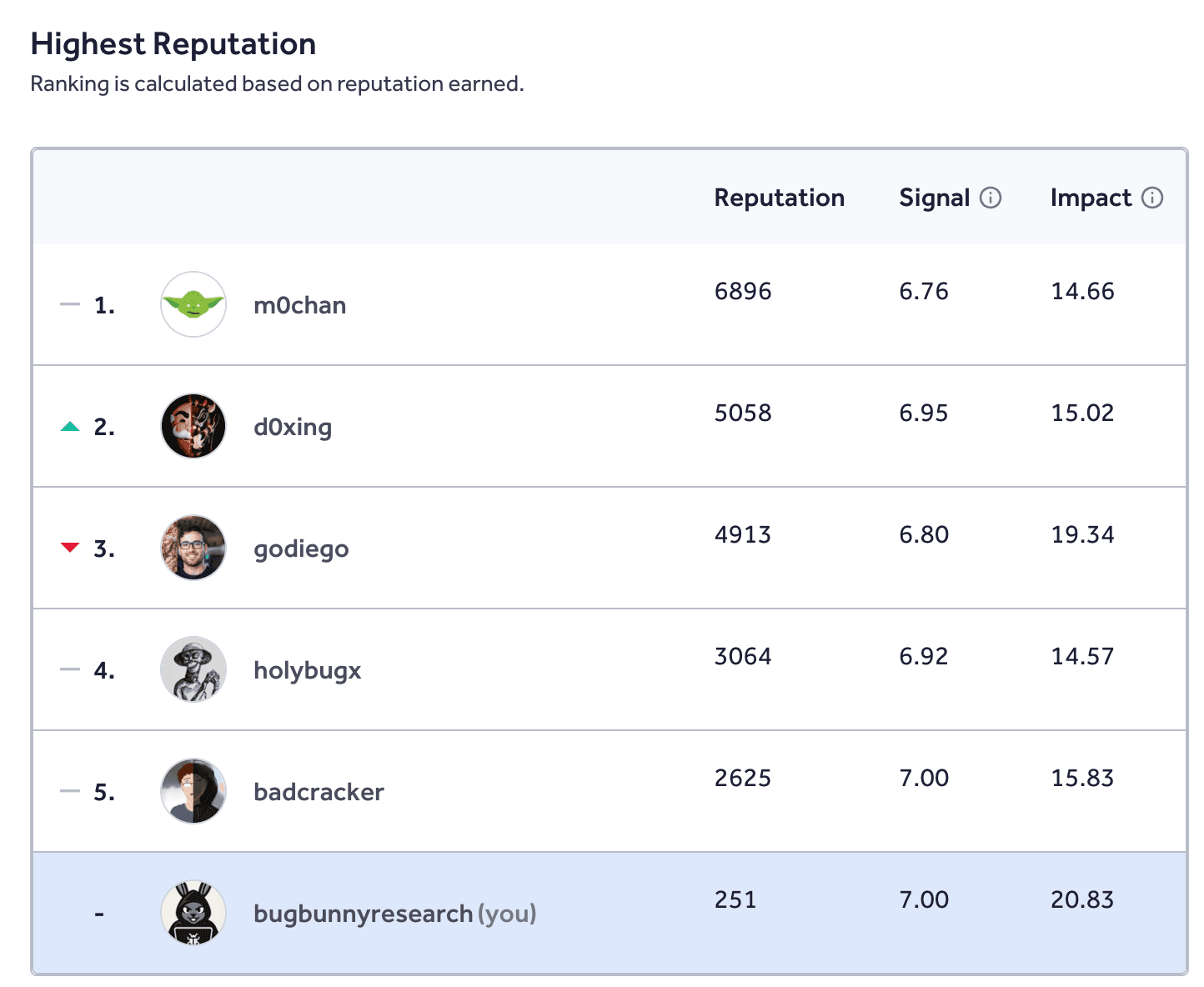
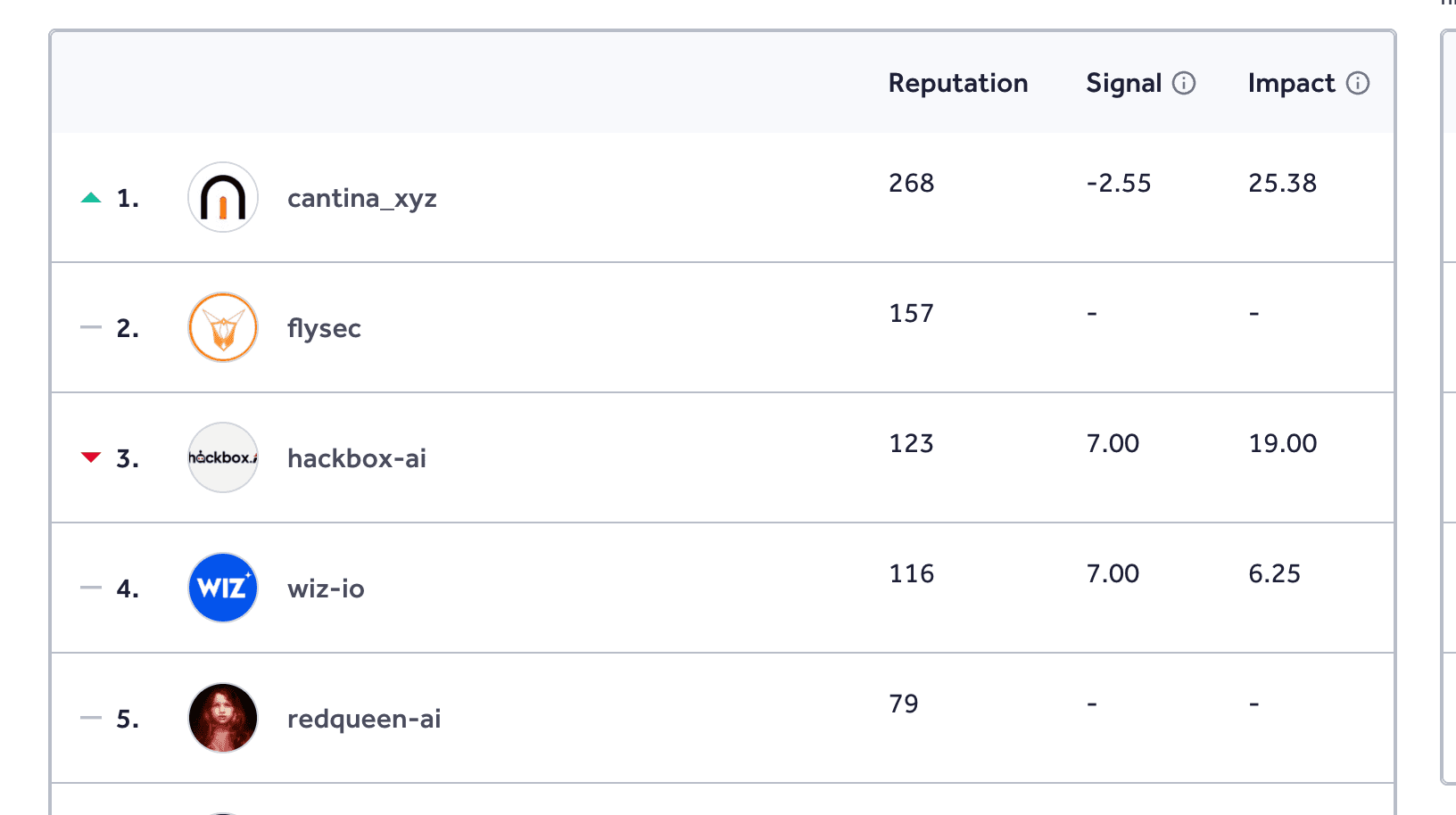
Method note: the ranking inference above is based on the public leaderboard snapshots provided by the BugBunny account plus the date-qualified HackerOne Business ranking claim current as of May 2026.
Why this matters operationally
A high-quality research signal usually reflects a process, not a lucky streak. It points to disciplined scoping, careful validation, concise reproduction, and an unwillingness to ship weak claims. That is exactly how BugBunny approaches offensive testing.
In practice, that means fewer false positives, fewer sprawling narratives, and fewer reports that force a customer to reverse-engineer the actual risk. The work should be technically rigorous, but it should also be economical for the receiving team. Precision is not a style preference. It is a delivery standard.
What customers should take away
- BugBunny already has a public record of 110+ CVEs across real software and production-adjacent systems.
- BugBunny is ranked No. 1 on HackerOne Business as of May 2026.
- The external signal is strong because the output is selective, technically precise, and actionable.
- The same operating style behind the public disclosures is what customers receive in private audits.